Guest lists, staff, and press: one registration instead of five spreadsheets
Why five lists break at the door
Start from categories, not from names
Give each company a quota and let them fill it
Set a cutoff time, and keep it
Badges that the door can scan
A short checklist for your next event
How Enigma Events handles it
Frequently asked questions.
Related articles
Offline check-in: preparing the door before doors open
White-label ticketing: what it changes for an organizer
See it with your own event.
Platform
Use cases
Resources
Company
Offline check-in: the staff app keeps validating tickets even when the venue signal drops. See how it works
Create and publish
Sell and collect
Run the door
Measure and communicate
Resources · Accreditation
Treat everyone who comes in without a ticket as one roster with categories, daily quotas, and zones. Let each company register its own people, set a cutoff, and give the door badges it can scan.
November 17, 2026 · 4 min read · Enigma Events team
Key takeaways
Define categories, daily quotas, and zones before you collect a single name.
Give each company a quota and let it register its own people.
A cutoff time gives the door a list that will not change while people are in line.
Badges with a QR code record who validated each person and when.
Guests, staff, suppliers, press, and artists can all go through one registration if you treat them as one roster with different categories, quotas, and zones, instead of five spreadsheets owned by five people. The goal is simple: one list the door can trust, with every person, the days they can come in, and the areas they can reach.
Most events get there the hard way. A production manager keeps the crew list, the bar supplier sends a file the night before, the publicist has the media list in an email thread, and somebody prints all of it at midnight. The door then has to merge five versions of the truth in real time.
Separate lists fail in predictable ways:
The same person appears twice, or not at all, because two people edited two files.
Nobody knows the latest version, so the door works from a printout that is already old.
Suppliers send more names than they were allowed, and there is no limit to stop them.
A name on the list says nothing about which day or which area that person can access.
After the event, nobody can say who actually came in, and when.
Before collecting a single name, define who comes in without a ticket and what each group needs. A typical festival or expo has these categories:
Staff: your own team and the people working bars, security, and cleaning.
Suppliers: sound, lighting, staging, catering, each as its own company.
Press: accredited media, often with a different area than the general audience.
Artists and their teams: with backstage and dressing room access.
Sponsors and comps: guests who come in through a partner or as your invitation.
For each category, decide three things: how many people it gets per day, which zones it can reach, and who is responsible for the list.
The biggest time saver is to stop typing other people's names. Give each supplier or partner a quota per day and let them register their own people, inside that limit. If they need more spots, they ask, and you decide.
This moves the work to the people who actually know the names, and it ends the night-before file with forty extra people nobody approved.
Every list needs a moment when it stops changing. Pick a cutoff for each day, communicate it to every company, and lock the list after that time. Late additions go through one person with authority, not through whoever answers their phone.
A cutoff is not about being strict. It is the only way the door gets a list that will not change while people are already in line.
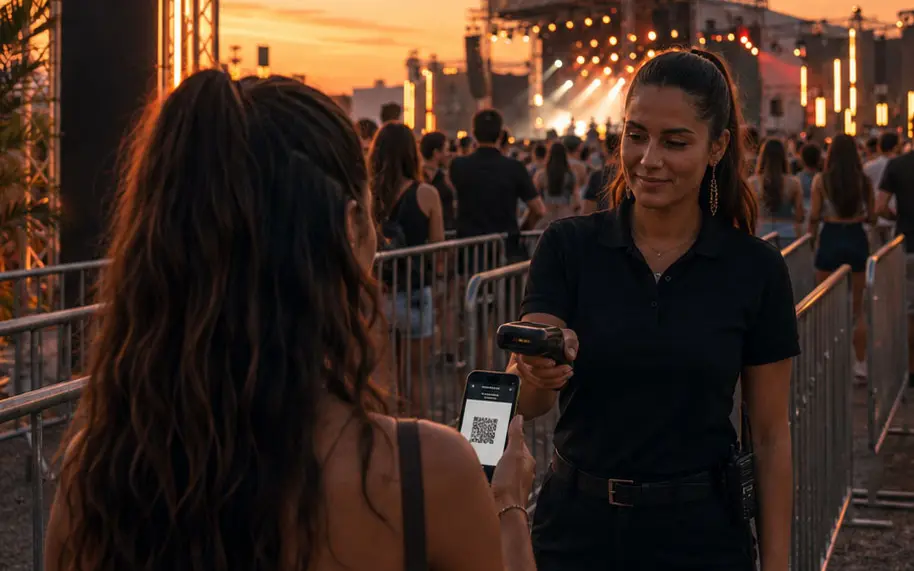
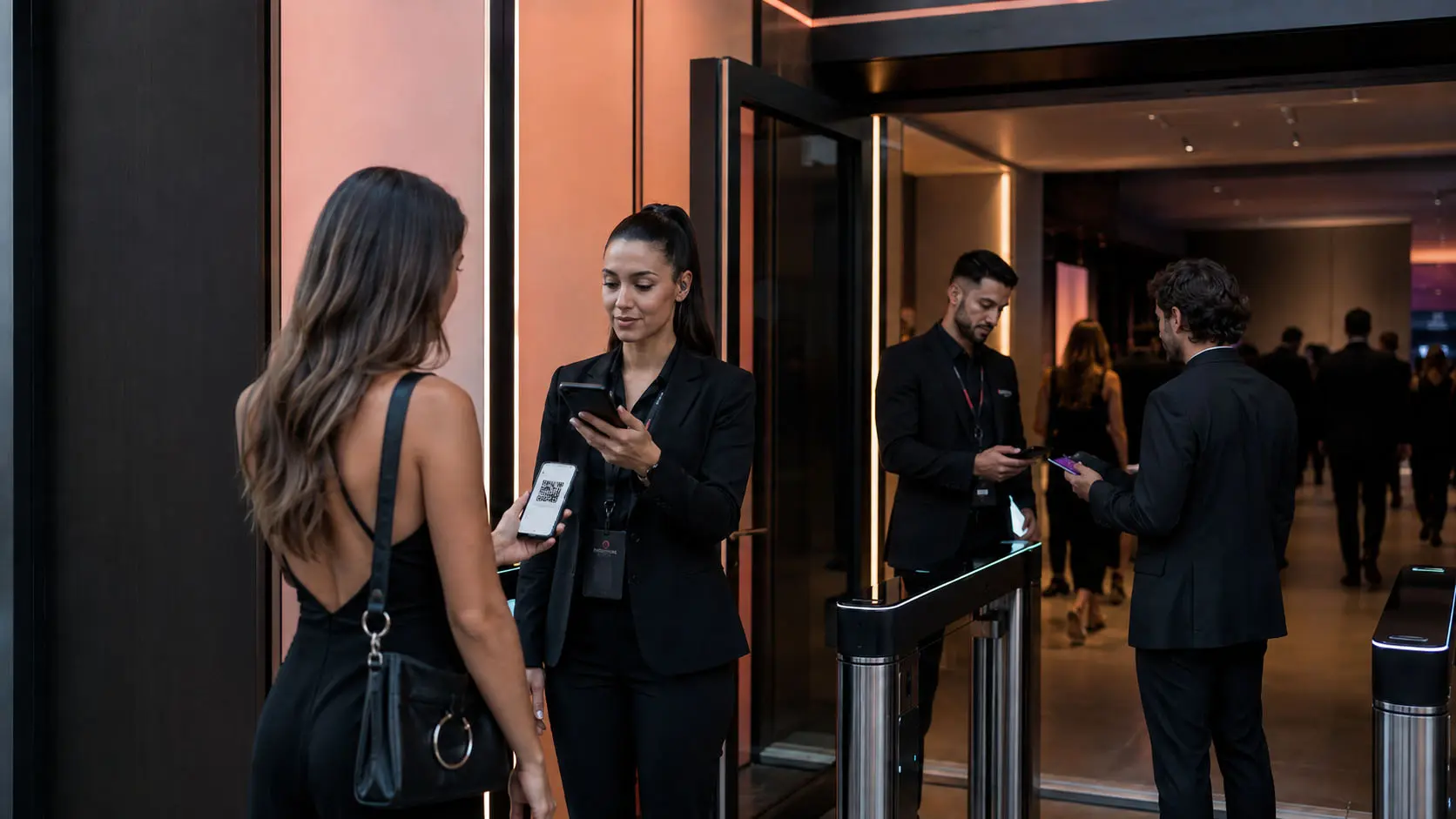
A name on paper is slow to find. A badge with a QR code can be scanned in a second, and the scan can record who validated it and when. That record is what lets you answer, after the event, whether a supplier really brought the people they registered.
Plan badge pickup like a small box office: a separate desk, away from the audience line, with someone who can fix a misspelled name without holding up everyone behind.
List your categories and the zones each one can reach.
Assign a quota per company or team, per day.
Send each company a way to register its own people.
Set and announce the cutoff time for each day.
Print or send badges with a QR code, and test scanning them at the door.
After the event, compare registered people with people who actually came in.
In Enigma Events, accreditations put staff, suppliers, press, sponsors, artists, and comps on one roster, with quotas by company or team, by day, and by category, catalogs of roles and zones, a portal where each supplier registers its own people, and a badge with a QR code validated at the door. You can see it under accreditations and badges , and how fairs and festivals use it in use cases .
For the ticketed side of the door, read offline check-in: preparing the door before doors open .
Questions
It is the registration of everyone who enters an event without a ticket, such as staff, suppliers, press, artists, sponsors, and comps, with the days and areas each person can access.
Give each supplier a quota per day and let them register their own people inside that limit. Extra spots go through you.
So the door works from a list that does not change during entry. Late additions go through one person with authority instead of whoever answers the phone.
Keep reading
Access control · 4 min read
Offline check-in works when every scanning phone holds the ticket data before the crowd arrives, validates without a server, and uploads entries when the connection returns. Preparing it is mostly timing.
Read article
Ticketing · 4 min read
White-label ticketing means buyers purchase on your site, under your brand, while a platform runs checkout, tickets, and the door. What changes is ownership: the buyer relationship and the data stay with you.
Read article
In the demo we use your venue, your tickets, and your door as the example.
Enigma Events is the ticketing, registration, and access control platform organizers use to create, sell, and run events under their own brand. Part of EnigmaSuite .
White label
Events and tickets
Seat maps
Payments and box office
Access control
Accreditations
Campaigns and reports
Producers and promoters
Event agencies
Venues and theaters
White-label ticketing
Fairs, expos, and festivals
Corporate events
Book a demo
Pricing
Articles
Customer sign-in
EnigmaSuite
Enigma Workforce
+1 647 509 5220
Privacy notice
Trust center
Español
English


 See how it works
https://enigmaevents.net/events/en
Producers and promoters Concerts, festivals, and tours.
Pricing
Resources
ES
Book a demo
offline check-in: preparing the door before doors open
Ticketing · 4 min read White-label ticketing: what it changes for an organizer White-label ticketing means buyers purchase on your site, under your brand, while a platform runs checkout, tickets, and the door. What changes is ownership: the buyer relationship and the data stay with you. Read article
EnigmaSuite
Customer sign-in
Enigma Workforce
Privacy notice
Trust center